Sunday, April 24, 2011

Easter Sermons

Early AM Sermon Audio

AM Sermon Audio

Being Sunday People in a Saturday World

John 19:31-42: Read it all:

“Then the Jews, because it was the day of preparation, so that the bodies would not remain on the cross on the Sabbath (for that Sabbath was a high day), asked Pilate that their legs might be broken, and that they might be taken away. So the soldiers came, and broke the legs of the first man and of the other who was crucified with Him; but coming to Jesus, when they saw that He was already dead, they did not break His legs. But one of the soldiers pierced His side with a spear, and immediately blood and water came out. And he who has seen has testified, and his testimony is true; and he knows that he is telling the truth, so that you also may believe. For these things came to pass to fulfill the Scripture, “Not a bone of Him shall be broken.” And again another Scripture says, “They shall look on Him whom they pierced.” After these things Joseph of Arimathea, being a disciple of Jesus, but a secret one for fear of the Jews, asked Pilate that he might take away the body of Jesus; and Pilate granted permission. So he came and took away His body. Nicodemus, who had first come to Him by night, also came, bringing a mixture of myrrh and aloes, about a hundred pounds weight. So they took the body of Jesus and bound it in linen wrappings with the spices, as is the burial custom of the Jews. Now in the place where He was crucified there was a garden, and in the garden a new tomb in which no one had yet been laid. Therefore because of the Jewish day of preparation, since the tomb was nearby, they laid Jesus there. ” (John 19:31–42, NASB95)

What we find here is an incomplete story. We find Jesus on the Cross. He's dead.

And the Pharisees want to get rid of Him the rest of the way.  Why?

They want their Saturday back. They don't want the interruption.

They need their habits, their regular activities....

People use Saturdays for all sorts of things. Some use Saturday to catch up on work from the week. Some use it for home maintenance. Some use it to catch up on homework, others for rest, and others use it to party and celebrate.

Yet when we take a look through Ecclesiastes, we see some things:

Ecclesiastes 1:17 reminds us that spending all our effort on knowledge is futile---

Ecclesiastes 2:10 reminds us that the pleasures are futile

Ecclesiastes 2:23 shows us the labor is futile.

This is the world we live in: there are all these things that we chase after. We live our lives for Saturday.

Even many of us within the church chase these things. We spend our time working hard for the Saturday things of this world.

Yet that chasing leaves us with Saturday feelings----a feeling of inadequacy, a feeling of coming up short.

A feeling of dread and frustration.

This is what Saturday really feels like.

We long for it to be so much more. But, in the end, Saturday doesn't last.

The good news is this----the good news is what happens on Sunday.

When we turn to Sunday, we find a better day:

“But on the first day of the week, at early dawn, they came to the tomb bringing the spices which they had prepared. And they found the stone rolled away from the tomb, but when they entered, they did not find the body of the Lord Jesus. While they were perplexed about this, behold, two men suddenly stood near them in dazzling clothing; and as the women were terrified and bowed their faces to the ground, the men said to them, “Why do you seek the living One among the dead? “He is not here, but He has risen. Remember how He spoke to you while He was still in Galilee, saying that the Son of Man must be delivered into the hands of sinful men, and be crucified, and the third day rise again.” And they remembered His words, and returned from the tomb and reported all these things to the eleven and to all the rest. ” (Luke 24:1–9, NASB95)

We no longer have to seek life among the dead

We no longer have to find our lives among the dead habits of before----

All of those things which were vanity, they become our service to the Lord God, to His Glory->

"whatever you do, do all to the glory of God. ” (1 Corinthians 10:31, NASB95)

That is our great joy this Easter and every Easter----that we no longer strive for vanity and futility, but that by the power of the Cross and the glory of the Resurrection, we live, every day, in glorious Sundays.


The wrath of God and the judgment of the day of the Lord cannot be a trifling matter. How emphatically are we told in Scripture, that it is "a fearful thing to fall into the hands of the living God." Upon such a subject we cannot afford to trifle.
Besides, the mystery of Calvary indicates to us that sin must deserve at God's hand a terrible penalty. Did Jesus suffer so bitterly to save men, and will not the unsaved endure bitterness indeed? Must the eternal and holy Son of God, upon whom sin was only an imputed thing—must he bleed and die, and offer up his life, with his soul exceedingly heavy even unto death—and is the world to come a thing about which men can afford to sport or idly dream?---CHSpurgeon

While the Cross is central to our faith as Christians, the Resurrection  is actually the hinge pin of our faith

“and if Christ has not been raised, then our preaching is vain, your faith also is vain. ” (1 Corinthians 15:14, NASB95)

What difference does it make for us to serve a Risen Savior? Why would our faith be different than if he were just a man?

If we served a man, we should count his death as our example, and so would seek death in service to him. The greatest we could do would be to emulate him: die at the hands of the wicked, opening not our mouths....

Yet we are commanded to be living sacrifices: Romans 12:1-2 “Therefore I urge you, brethren, by the mercies of God, to present your bodies a living and holy sacrifice, acceptable to God, which is your spiritual service of worship. And do not be conformed to this world, but be transformed by the renewing of your mind, so that you may prove what the will of God is, that which is good and acceptable and perfect. ” (Romans 12:1–2, NASB95)

If we served a man, we would constrained to follow laws to please God---“Thanks be to God through Jesus Christ our Lord! So then, on the one hand I myself with my mind am serving the law of God, but on the other, with my flesh the law of sin. ” (Romans 7:25, NASB95)

Rather, we are free to live in Him: ““I have been crucified with Christ; and it is no longer I who live, but Christ lives in me; and the life which I now live in the flesh I live by faith in the Son of God, who loved me and gave Himself up for me. “I do not nullify the grace of God, for if righteousness comes through the Law, then Christ died needlessly.” ” (Galatians 2:20–21, NASB95)

If we served a mere man, we would be trapped in the sin we have earned: Romans 6:23

Yet the free gift has been bought, paid for, and given. It is finished---John 19:30

So we must: (Not options: "It is our duty and our privilege to exhaust our lives for Jesus. We are not to be living specimens of men in fine preservation, but living sacrifices, whose lot is to be consumed." CHSpurgeon

Become, ourselves, the children of God -> John 1:12 “But as many as received Him, to them He gave the right to become children of God, even to those who believe in His name, ” (John 1:12, NASB95)

Take our cross and follow Him -> Matthew 10:37-39: ““He who loves father or mother more than Me is not worthy of Me; and he who loves son or daughter more than Me is not worthy of Me. “And he who does not take his cross and follow after Me is not worthy of Me. “He who has found his life will lose it, and he who has lost his life for My sake will find it. ” (Matthew 10:37–39, NASB95)

Go through our lives making disciples ->“And Jesus came up and spoke to them, saying, “All authority has been given to Me in heaven and on earth. “Go therefore and make disciples of all the nations, baptizing them in the name of the Father and the Son and the Holy Spirit, teaching them to observe all that I commanded you; and lo, I am with you always, even to the end of the age.” ” (Matthew 28:18–20, NASB95)

Why?

His work to provide grace is finished, though His Spirit still draws, His Word still speaks. The remainder is this: how will you reply?

Wednesday, April 20, 2011

Consider yourself warned

Last night, the name of the small town I live in was mentioned on the 2 of the broadcast TV stations in Little Rock. While this sounds like we have arrived into fame, it was actually this:

"Looks like that rotation is headed toward….Almyra."

That rotation? Well, that's the radar echo in a cloud that makes the weatherman think a tornado is either there or soon to be there. It's not a happy thing.

At that point, we decided to go ahead and get the kids up, move them to our bedroom, and watch to see what happened. Before that, just Ann and I were up and watching radar screens. Well, watching the internet posts of radar screens. We don't have our own weather radar though that would be awesome!

It's a debate for us how to respond to the storm warnings. We've both been here in the South for a long time, and we're kind of dull towards certain weather words because of it. "Tornado watch" and "Severe Thunderstorm Watch" are two of them. Why? They happen all the time. Seriously.

Here in East Arkansas, for example, we are either in high fire danger because it's too dry or under a tornado watch. I don't have documentation for that, but it seems true.

Even swapping Warning in for Watch doesn't get us as excited as it used to. There was a time that the weather people issued a warning only when there was visible evidence of a tornado. That required storm spotters and also delayed such things to the last minute. With technology improvements, now they can issue a warning based on radar and give people much more time to know a tornado is near them.

Except that system still warns entire counties. Arkansas County is over 1000 square miles (Rhode Island is a little over 1500 square miles). That's a lot of territory, and if there's a tornado moving in some parts of the county, it could still be clear in other parts! And yes, that happens. Not as much in this county because it's so flat, but there are counties in Arkansas where that's normal.

In truth, we don't really get excited about the storm systems until we hear Almyra from the weatherman. Or see for ourselves via BlackBerry, internet, or getting really close to the TV. It's just so normal for there to be storms around us, even destructive, killer storms, that we sleep through them.

What strikes me about this attitude towards the amazing power of wind and rain is that we so often have it about life. We see the destruction all around us, but we don't really take the threat to us seriously.

It's the refrain of the addict: sure, other people that do this have a problem, but I'm under control. It's not going to destroy me.

It's the refrain of those embarrassed to seek help: I know that depression is a real problem, but it's not a problem I have. That's a problem he has, she has, they have, maybe even you have, but it's not my problem.

It's the refrain of the lonely: true, no man is an island---but I'm strong and I'm fine.

It's the refrain of many of us: that rule may apply to life in general, but I'll find a loophole.

That watch, cautioning me to be careful of temptation, it's not that critical. That warning? That I'm detaching from the world and headed into the darkness of depression? That's just broad information.

We are often so proud, so certain that the problems are "over there" or "down there" that until it calls our name specifically, we take no precautions. We take no actions.

Consider yourself warned, though: the danger is real. The risk is there. It will call your name.

Are you prepared?

What can you do?

Have a safe place. Have safe people. Have a trustworthy God to call out to when the world breaks down.

Monday, April 18, 2011

BookTuesday: Max on Life

Just like last week, BookTuesday is making a special Monday appearance. Thomas Nelson Publishers has a good April going, with last week's release of Andy Andrews' The Final Summit and then this week's special release. What is this week's?

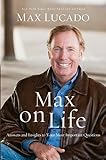
It is the latest book from Max Lucado, Max on Life. Here's a picture of the cover and the expected Amazon.com link:

Max On Life: Answers and Insights to Your Most Important Questions

This book is a departure from the typical Max Lucado fare. If you've typically read Max Lucado, you've seen him illustrate the 23rd Psalm, the story of the Crucifixion, and the return of Christ. He typically writes inspirational stories to illuminate specific passages of Scripture, and he does it well. The departure here is that Max on Life is a collection of answers to letters and questions. 

In total, there are 172 questions with one to two page answers for each of them. Lucado reports these as real questions that have been posed to him. By summarizing the letters and conversations, these become anonymous for the reader. 

Which serves two purposes quite well. The first is protecting the privacy of the writers. More than that, though, it allows the reader to find themselves in any question. There are some questions that may not apply now, but they might someday.

Is there anything lacking here? This book is like a public view of personal correspondence. While Lucado presents varied Scriptural stories, he doesn't answer them with a sermon or outline, and not often with a direct Scripture quote. This isn't bad, because Lucado still handles the issues from a Scriptural viewpoint. However, chapter and verse aren’t frequently present.

This is precisely what this book is intended for, though: a presentation of a God-centered viewpoint on the diverse questions people have. Questions that don’t really have a direct verse answer but need a good one.

I found this to be practical and helpful read.

Sunday, April 17, 2011

Sermons: Palm Sunday

Morning Audio Link

Evening Audio Link


Morning Sermon:

What's happening?

I. It's time to enter Jerusalem:

     A. First important point: Coming in from outside the city

     B. Second important point: Riding on a donkey:

          1. Sign of peaceful entry

          2. Fulfillment of Zechariah 9 prophecy

II. The crowds:

     A. Shouting "Hosanna"

     B. Incorrect identification---"This is the prophet Jesus, from Nazareth in Galilee"

III. This is how the same crowd turns a deaf ear (at best) to "Crucify!" in less than a week: (Note: there are changes, certainly, as much of the Sunday crowd is also coming into Jerusalem, and it seems the crowd on Friday is assembled within the city. However, where did those people go? The Passover is that day. They’re around there somewhere.)

How we identify Jesus matters

1. There is a constant pressure to redefine Jesus:

     On CNN's website just this past week someone tried to redefine Jesus as not knowing or acknowledging the Old Testament

     There's the effort to paint Him as anything but God

2. We must take care to define Him as He is:

Not merely a prophet: while there have been many prophets who speak the words of God, He is not one of them.

Not merely a teacher: we cannot reduce Him to just a teacher

CS Lewis -> Liar, lunatic, or Lord argument

If we do not recognize Him as Lord, there's no point in shouting "Hosanna"

We must move from Crucify to Hosanna!

Evening:

What is acceptable in the Temple?

Well, we don't live with a Temple these days, do we?

How does this apply, then?

1. What does it take to be accepted by God?

     Not our riches nor trading our riches for more 'acceptable' ones

     Not our own sacrifices

2. It takes:

     Faith like a child

     Coming in our weaknesses

     Coming in prayer

We will have to decide:

1. What do you think is bringing you before God?

2. Are you willing to come honestly?

3. Are you willing to let others come?

Thursday, April 14, 2011

The wheat and the tares

We're growing a garden this year in the Hibbard family. We've planted corn, carrots, cantaloupe, broccoli, and tomatoes. Right now, as I look at the garden, I see lots of little green sprouts coming up.

Sounds good, right?

Well, about half of those green sprouts are grass. Some of those sprouts are weeds. A few of them really are the plants we want to grow.

I'm just not sure which ones.

This has shed a whole new light Matthew 13:24-30 for me. This parable teaches about a field sown with both good and bad seed, and how the field owner allowed both types to grow until harvest.

I'm not going to allow both types to grow all the way until harvest, but I do have to let them grow a little while longer. At least some of them I'll have to. Here's the breakdown:

1. There are some sprouts that are obviously grass. I can tell this by the root runners to the grass outside of the garden. Those are coming up right now.

2. There are some sprouts that will show themselves pretty soon: there's two leaves coming off a center-stalk and that's not corn, I don't think. Those come up in another week or two.

3. There are dead leaves. Those can go now too.

4. There are some sprouts that are likely the plants I planted, but they may not bear fruit. Those stay until it's obvious they're not producing.

5. Then there are the sprouts that will produce good fruit. I'll know those in the end.


This illustrates a great many ideas in the Christian life for me.

First of all, and most often applied, this symbolizes various people that we find claiming Christianity. The biggest deal here?  We aren't fully capable of making that evaluation. Sometimes, it's obvious at the beginning: that guy who want the church to sacrifice cats, "just in case," he's a dead leaf.

The other thing about people is that the Master is capable of changing them from dead leaves into viable sprouts. After all, had I been a part of First Baptist, Damascus, during Acts 8, I would have planned to skip church the day Saul came to town. However, by Acts 12, I would have moved heaven and earth to get there. So, we have to be very careful when it comes to people. Limiting their influence is appropriate, but limiting their access to the Gospel and the fellowship of believers might go too far.

The other way this applies, I think, is the choices we make as believers. There are some choices we make that are easy to see which ones are good and which are bad. We shouldn't take the obvious grass choices. We should definitely toss the dead leaf choices from our lives.

Yet there are others that we may have to wait and see what's good and what's bad. It will take some time to develop that information. As soon as you see it, though, you act on it. As soon as I can tell that it's a weed and not a corn plant, it's gone.

I can, however, give you two ways to shortcut the process:

1.) Book learning: I have a book about gardening. I'm going to try and compare pictures with plants, and that will help.

2.) Outside help: I live in farm country. I've got a corn farmer who can show me what's corn and what's not. There are others who have gardened and I can rely on their wisdom and experience.

You do see where this is going?

You don't?

1.)In life, there is first of all the Book: the Bible. This will help you with nearly everything. Then there are other books that help illuminate Biblical principles and values. Those help too, insofar as they don't counter the truth but bring application for it.

2.) There are people with wisdom. Seek them, time after time, to provide guidance. Experience is the best teacher, and there are people that have already learned from experience, so don't re-experience what you don't have to!


Doug

Monday, April 11, 2011

BookTuesday: The Final Summit

Yes, it’s Monday. Occasionally, in exchange for a free book, I have to write a review with a due date. This is one of those cases. The date? Today, April 11. So, BookTuesday on Monday.

What is the book? This book is Andy Andrews’ newest book: The Final Summit. Here’s the Amazon link:

The Final Summit: A Quest to Find the One Principle That Will Save Humanity

Here are a few things this book is not about:

  1. Quitting mountain climbing. It’s not that kind of summit.
  2. Crystal-clear theology. Let’s clear that up right quick: This book is a fictional story, not a theological treatise. You should never base your theology on fiction. Ever. Fiction illustrates principles and can teach principles, but take the principles from fact.
  3. It’s not about a feather, no matter what the cover art seems to show.

Ready to move on?

Good. This book is about:

History. Andrews is at his best when taking historical facts and weaving them into points that the reader can apply right now. He did this for The Traveler’s Gift, The Lost Choice, The Heart Mender, and The Butterfly Effect. Yes, those are most of his books. (No, that’s not an affiliate link, so go buy the books straight from the source.) The Final Summit is no exception. He has woven the lives of Winston Churchill, Abraham Lincoln, and others into a captivating tale.

As someone who read and enjoyed The Traveler’s Gift, I was pleased that this was the continuation of the life of David Ponder, the only fictional person to feature heavily in both books. We find in The Final Summit that Ponder has reached nearly the end of his life, and is reflecting on it, when a different crisis hits.

He, among dozens of others, are summoned to answer the question “What must humanity do to restore the path to true civilization?” They have 6 chances to get the answer right, and they have a time limit.

Oh, and it’s just two words.

Combining wit, wisdom, and inspiration, Andy Andrews takes us through the questions, wrong answers, nearly right answers, to what he thinks is most important.

Personally, I agree with his conclusion. You need to read the book to know what it is, but even as theologically conservative as I am, as passionate as I am that God is sovereign in the affairs of men, the universe, and elves (H/T J.R.R. Tolkien), Andy’s hit this one straight on.

This is well worth your time to read.

Want more info?

Check out a brief video interview with Andy on Michael Hyatt’s blog. Follow the instructions, and you might even get a free book from it!

Also, click over to Ann Hibbard’s blog and read her review today as well. She’s never read The Traveler’s Gift, so she’ll bring the perspective of first meeting David Ponder at The Final Summit. Plus, she’s a better writer than I am anyway :)

Get this book. Give this book to graduates, students, preachers, teachers, and horse thieves. We could all use it.

Doug

Sunday, April 10, 2011

Sermons: April 10

Morning Audio Link here

Evening Audio Link here

A couple of quick notes:

Sunday morning, the audio is a little different. Why? Well, I left my recorder at home, so I captured the audio via Blackberry. And you know how Blackberries get sometimes: frozen.

We observed the Lord’s Supper, so the overall service ran differently. Also, picture this: in front of the table with the elements of the Lord’s Supper, there’s a table stacked pell-mell with books. Lots of books. Got the picture?

Good.

Also, there’s not a written outline for the evening service. Why? Because I haven’t written one. Sometimes, I just don’t. This is one of those times.

To-Do Lists

 A to-do list is a great thing.  However, it's predicated on the assumption that you will get everything written down. And that you will...