Monday, March 14, 2011

Sermons 3-13


Morning Audio Link Here

Evening Audio Link Here

Morning

“For through the Law I died to the Law, so that I might live to God. “I have been crucified with Christ; and it is no longer I who live, but Christ lives in me; and the life which I now live in the flesh I live by faith in the Son of God, who loved me and gave Himself up for me. “I do not nullify the grace of God, for if righteousness comes through the Law, then Christ died needlessly.” ” (Galatians 2:19–21, NAS)

We must understand some truths here:

I. We do not have a life any longer

a. Our life was, by law, forfeit for our sins

b. We deserved death

c. When Christ went to the cross, we are supposed to count ourselves as having gone as well

II. The life we have now is not our own

a. Christ lives in us

b. We live in the flesh

c. Yet that life in the flesh is to belong to Christ

III. Why?

a. Because He loved us

b. He gave Himself up for us---

i. (Can give without loving, but not love without giving—Amy Carmichael, missionary)

IV. What does our love return to Him?

a. The life we have now

b. Not merely a life of Law

c. But a life of righteousness, given by Christ

V. Attempting to live in obedience does not undo the Gospel of the Cross

a. Righteousness does not come through the Law

b. Righteousness comes from being crucified with Christ

VI. Christ did not die needlessly

a. Yet you might live needlessly

b. Surrender to Him

c. Live in Obedience

Evening:

But when Cephas came to Antioch, I opposed him to his face, because he stood condemned. For prior to the coming of certain men from James, he used to eat with the Gentiles; but when they came, he began to withdraw and hold himself aloof, fearing the party of the circumcision. The rest of the Jews joined him in hypocrisy, with the result that even Barnabas was carried away by their hypocrisy. But when I saw that they were not straightforward about the truth of the gospel, I said to Cephas in the presence of all, “If you, being a Jew, live like the Gentiles and not like the Jews, how is it that you compel the Gentiles to live like Jews? “We are Jews by nature and not sinners from among the Gentiles; nevertheless knowing that a man is not justified by the works of the Law but through faith in Christ Jesus, even we have believed in Christ Jesus, so that we may be justified by faith in Christ and not by the works of the Law; since by the works of the Law no flesh will be justified. “But if, while seeking to be justified in Christ, we ourselves have also been found sinners, is Christ then a minister of sin? May it never be! “For if I rebuild what I have once destroyed, I prove myself to be a transgressor. ” (Galatians 2:11–18, NAS)

Two separate points to grasp here:

I. Rebuking leaders

a. Basics:

i. Recognize, first of all, that even great lights of the faith can make mistakes

ii. Recognize that there are none who have overcome sin perfectly (except Christ)

iii. Recognize that Peter was capable of making a mistake

b. For those who lead

i. If Peter can falter, so can you

ii. If Peter can take correction, so can you

iii. If Barnabas could be led aside, you can lead others aside

iv. If Barnabas could be led aside, you could be led aside too

c. For those who notice the sin

i. Public sin that leads people astray requires public repentance

ii. Public sin that threatens the Gospel must be addressed

iii. Public sin may require the uncomfortable role of public rebuke

iv. This is not being judgmental if it’s obvious

d. What to do?

i. Be clear on the Gospel

ii. Stand clearly for the Gospel

iii. Speak clearly the truth

iv. Address---actions, attitudes, appearances

v. Not---motivations or the unseen

vi. Passionately but under control

II. Racism/Culturalism

a. This cannot be overstated from this passage:

b. No one culture or race is preferred by God

c. The Law condemns all

d. Grace extends to all

e. Separating over preferred culture and ethnicity is sinful

f. We dare not treat anyone as if Christ did not die for them because of their ethnic background

Sunday, March 13, 2011

Learned and Convinced

“You, however, continue in the things you have learned and become convinced of, knowing from whom you have learned them, and that from childhood you have known the sacred writings which are able to give you the wisdom that leads to salvation through faith which is in Christ Jesus. ” (2 Timothy 3:14–15, NAS)

Reading 2 Timothy this morning, this jumped out at me. Especially "the things you have learned and become convinced of…." When Paul writes this to Timothy, he speaks of the two facets of discipleship and faith.

What are those two facets, you ask? Well, maybe you did…

They are both related to knowledge. We need to clear something up about knowledge and Biblical Christianity. The New Testament knows of no Christians that do not act on what they know. Discipleship is the process of learning what is required and acting on what is learned. Christian Discipleship, therefore, is learning what is required by Christ and acting on it.

Two facets: intellectual knowledge and experiential knowledge. We have a tendency out here in Western Christianity to prefer one to the other, but let's take a moment and realize what these words mean and why both are important.

Intellectual knowledge is, well, facts and details. It is composed of the things that you know (or I know) that we learn from reading and teaching. This is a crucial part of our life as disciples of Christ. Why? How do I know Jesus was born? How do I know of the lives of those who have gone before in the faith? All of this is, in truth, intellectual knowledge. I can claim that my life shows that I know Jesus lives because He lives within my heart, but I really know this because I have read it and been taught it.

Experiential knowledge is the things that I have experienced. It's the things I know because I have seen and experienced them in my own life. Whether it be the ability of God to mend a broken heart or His power to heal where doctors are at a loss, the work of the Spirit to bring peace to relationships or to change a sinner's heart and life, these are things that I not only know from intellect, but from experience.

We have a tendency to pick one of these and prefer it, as I said above. Some would hold that only what is written and passed on by those before us is valid, that there is no place for "I have seen…." Others, meanwhile, would discard all teaching from others and only acknowledge what they, themselves, have experienced.

Yet Paul commends to Timothy to remember what he has learned. He highlights the sacred writings and reminds Timothy of them. These are not things Timothy experienced or ever would. After all, Timothy would learn of the parting of the Red Sea, but not experience it. We cannot downplay the importance of learning intellectually.

Neither can we deny learning experientially. Paul has this in mind when he highlights have become convinced of. This speaks of things that Timothy knows not just from intellect but from seeing them in action. By his own experience, Timothy has seen God at work, has seen God's power, and proven God's trustworthiness.

As we grow to follow Christ, we have to start with what we've learned from others. In the course of life, we'll see some aspects of our faith proven to be true. From those experiences, we learn to trust the intellectual that connects to them.

We cannot live without both. We dare not become bookworms that do nothing nor busy bees that know nothing.


Doug

Saturday, March 12, 2011

Organization and Chaos

I think I've said this before, but it bears repeating:

It take a lot of effort to get life organized. More than just a little, a lot. For me, I've had to sit down, take a look at what I do with my time, and figure out how much time it should all take.

Then, I have to find a way to schedule it. This is difficult, because my weeks range from wide-open to having a lot of outside pressures on them. So, I have to be flexible with when I do, but don't have a great deal of flexibility about what I do.

So, for the past several months, I've been living with chaos. I haven't gotten done things that needed to get done, much less made any progress on my 'spare time' projects. This has been a bad thing.

So, I've taken the last 3 days of my time, and of Ann's time, and we've worked out the details. Well, at least most of them. She's offered to help me by looking back at the schedule every week. This is going to help.

I'm also going to borrow from a few of the greater lights of the Web, like Michael Hyatt at Thomas Nelson, and put daily and weekly reviews of my to-do list and effectiveness. In all, I hope this helps.

What to learn from this? Sometimes, you have to back to go forward. You have to spend time to have time. While that may seem counter-intuitive, it's still true. So if you have to stop and back up, do it. It's good for you.


Doug

Tuesday, March 8, 2011

BookTuesday: Game Plan for Life

Today's book review is Joe Gibbs' Game Plan for Life. Here's the cover:

Game Plan for Life: Your Personal Playbook for Success

And indeed, it's a free book review book from Tyndale Publishers. So don't think there's no relationship---although no one at Tyndale could pick me out of a police lineup, they do send me books every now and then!

Game Plan for Life is Joe Gibbs' entrance into the world of turning success into publishing. It's become a well-trod path, though a few of the trips down this path have gone off a cliff.

Game Plan, though, doesn't go off the cliff. Rather, this book surprised me. I expected references to Gibbs' football experiences and his NASCAR team ownership, and of course those were present. However, this book is more than just an extended sports metaphor.

Gibbs has attacked the idea of writing a book to guide you to personal success the same way a head coach builds a winning team: find experts in specific areas and put them to work. For Gibbs, that means putting authors like Ravi Zacharias, Charles Colson, and Randy Alcorn to work in his book.

Ultimately, though, just like a head coach, Gibbs is responsible for the final outcome of the book. He's done well with it. Woven through the various topics in the book are stories from Gibbs personal and professional life. He follows up each chapter with a short summary section. Since he's primarily known as a football man, it's no surprise to find these labeled as "Two-minute drills."

I mentioned that this book surprised me. Here's why: the front cover features the phrase "3-Time Super Bowl Champion and 3-Time NASCAR Champion" in front Joe Gibbs' name as if it were a title like "Dr." or even a military rank.

Then, into the book, I think there's maybe one or two references to any of those championships. His victories are on the cover, but the heart of the book is illustrated by his failures and shortcomings. It's not phrased as a "oh, I had trouble, too" type of thing, either. It's worded as "there's more to learn from the failures than the successes."

As it stands, I'd highly recommend this book for a men's class or a Bible study, also for anyone wanting to think through some basic implications of how the Christian faith looks when lived out.

Again, a great read and well worth your time. With this, Joe Gibbs jumps to being my second favorite coach (even though he's not coaching). Now, if he'd quit having his team drive Toyotas…..

Doug


To be clear: Tyndale sent me a copy of this book in exchange for the review.

Monday, March 7, 2011

Sermons—March 6


First of all, I apologize for the lesser audio quality. My digital voice recorder disappeared off of my desk this week, so I had to use my cell phone voice-notes app to record this. So, it's an open microphone on the whole church instead of a clip-on mic. There's a good bit of background that you'd need a professional to filter. Let me know if this qualifies as "better than nothing" or as "don't bother" so I know how to proceed until my voice recorder comes back.

Sunday AM Audio Link

Sunday PM Audio Link

But it was because of the false brethren secretly brought in, who had sneaked in to spy out our liberty which we have in Christ Jesus, in order to bring us into bondage. But we did not yield in subjection to them for even an hour, so that the truth of the gospel would remain with you. But from those who were of high reputation (what they were makes no difference to me; God shows no partiality)—well, those who were of reputation contributed nothing to me. But on the contrary, seeing that I had been entrusted with the gospel to the uncircumcised, just as Peter had been to the circumcised (for He who effectually worked for Peter in his apostleship to the circumcised effectually worked for me also to the Gentiles), and recognizing the grace that had been given to me, James and Cephas and John, who were reputed to be pillars, gave to me and Barnabas the right hand of fellowship, so that we might go to the Gentiles and they to the circumcised. ” (Galatians 2:4–9, NAS)

I. No place for secret agendas

a. There should be no secrecy in the body of Christ

i. There are times for confidentiality:

1. Counseling

2. Personal problems

ii. However—secrecy:

1. Secret business actions

2. Secret plans by the preacher

b. We should be willing to allow our intentions and desires to be known

i. Even if we think they are silly

ii. It is better to deal with open truth

II. No time to yield the truth

a. While we must take the time to determine the truth

b. The Truth is found in the Word of God

c. When someone undermines the truth it must not go un-addressed

III. No regard for reputations

a. Truth is truth—

i. It does not matter who moves away from it-

1. Notable apostates

2. Descendants

ii. It also does not matter who actually supports it

b. The most important issue is what the Lord Jesus Christ has said

IV. How does this matter to us?

a. We are not the only followers of Christ in this world

i. We need to:

1. Fellowship for our own sake

2. Work together to accomplish God’s commands

3. We need to determine who we can work with and not work with

ii. We must:

1. Filter our own influences

2. Be wary of bad influences

a. Date-setters

b. Prosperity gospel

b. We must look to our church and the decisions we make as a church

c. Where do we stand?

i. If truth isn’t important, what is?

ii. We have one thing to hold on tightly: the Truth of Christ

d. If you have no truth, what do you have?


Sunday Evening:

They only asked us to remember the poor—the very thing I also was eager to do. ” (Galatians 2:10, NAS)

I. This is not a command of works to be done:

a. How do we know?

b. Asked---not commanded

c. Paul is also eager, not hesitant, to do this.

II. Who are “The Poor”?

a. Those without money (duh.)

b. Effectively, those without the means to provide for their needs

c. Why are they in this situation?

i. Willful religious poverty (but see 2 Thessa 3:10)

ii. Persecution (See John 9)

d. Most likely: these poor are in that situation because of being ostracized for their choice to follow Christ.

III. Paul is eager to do this:

a. He’s already thought of this—note the also

b. The presence of agreement: they asked the very thing he’d already thought of doing

IV. How about us?

a. Are there poor for us?

i. Certainly there are the financially poor---

ii. There are those who have given themselves and hope of wealth for the service of the Gospel

1. Your pastor is NOT one of them

2. Missionaries

3. Pastors in diverse situations:

a. Many foreign nations

b. Some frontier parts of the US

iii. How can we remember them?

1. PRAYER

2. Financial support

3. Personal effort

b. Support for the persecuted

Wednesday, March 2, 2011

Choices

Every act of will is an act of self-limitation. To desire action is to desire limitation. In that sense, every act is an act of self-sacrifice. When you choose anything, you reject everything else. —G.K. CHESTERTON, Orthodoxy

This is one of several things I've read lately that has challenged me about my limitations. Specifically, challenged me to acknowledge that I have limitations.

First, I read this from Randy Alcorn, about saying no to good things to be able to do other good things. (Yes, it's an older post. Someone must have linked it and I read it recently.)

Then there have been various other things I have read, and today the above quote from Chesterton. So I'm contemplating self-limitation.

I really and truly can only do a few things with my time. Some things will require more effort than others, and some things just require more time.

The hard part is to make the choice to let go of something. For example, I have 3 graduate courses I'm taking, pastor a church, and write for this blog. I also want to work on a couple of ideas that will take more than a blog to write. Plus there's the detail of 3 kids and my wife.

If I choose to spend 8 hours on a book, then I'm choosing not spend those hours on family, work, or school. If I choose to spend those hours on family, then work and school don't get them.

And so on.

Yet if we don't make those choices, then everything suffers.

So, I must learn to limit myself. Realize that if I think my expertise has to be applied to every situation, then my expertise will suffer and be useless in all situations. How does that flesh out?

The difficulty comes from not wanting to be responsible for what I let go of, for what I limit myself from as much as what I commit myself to. After all, who's going to run the country if I don't? Who's going to fix that or correct that? If I don't fix the Southern Baptist Convention, who will?

So I struggle with my choices, I struggle with self-limitation, because I think I have to be everywhere. I don't.

It's a challenge worth developing. How about you? Do you find yourself having to do everything? What do you have trouble letting go?


Inc Merriam-Webster, The Merriam-Webster Dictionary of Quotations. (Springfield, Mass.: Merriam-Webster, 1992), 58.

Tuesday, March 1, 2011

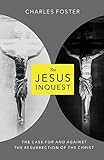
BookTuesday: The Jesus Inquest

Next on the docket (and I use that word advisedly) is The Jesus Inquest by Charles Foster. Why docket? Because Foster, while now primarily a writer, started his career as a barrister. For my fellow Americans, barrister is the British word for lawyer who argues in court. They have two kinds of lawyers: solicitors and barristers. Foster is also a part-time judge, an author, and Oxford professor. Enough about him. He's got his own webspace for self-promotion. You're here for my opinion of his book

His book? It's entitled The Jesus Inquest and it's published by Thomas Nelson Publishers. So, I got one free from Booksneeze in exchange for the review you are about to receive. That's it, though. Free book for a review—no money and no influence.

To pick up The Jesus Inquest is to commit yourself to being a little over your head, if you're an average reader. This book is quite detailed, and you may find yourself in need of a legal pad to keep up with it. Why?

Foster wrote this in the style of a debate. He created two characters, X and Y, to argue against and for the fact of the physical resurrection of Jesus of Nazareth. Apart from the uncreative names, this is a good setup for his presentation. Actually, the uncreative names are fine: there is not much prejudice to come from using algebraic variables in place of names.

X will present arguments that show the historical unlikelihood of Jesus rising from the dead. Y will refute those arguments. Y will present affirmative arguments that X then gets the opportunity to present.

While I can't say for certain that it's perfectly balanced, I think Foster balanced the two views fairly well. X's arguments have the weakness of presenting from the spectrum of anti-Resurrection theories. By this, rather than pursuing one particular theory of those who deny the Resurrection, Foster has X using many of the modern arguments. It results in X being very wide in presentation, but not as deep as some would argue. However, Y is faced with the variety to answer, so Y is not helped by this. I only bring this up because there will be some readers who question why X didn't bring up sub point 5 of argument 3. It's because X is not just using one argument but many.

Also, Foster seemed to do a good job keeping his own opinion to himself. While I share his opinion that the Resurrection really happened (I'm pretty sure that's his opinion), I think he was fair and clear for both sides. I'll admit that I might miss pro-Resurrection bias, though.

Is this a light and fluffy read? No. There are some weighty arguments. There are some ambiguities: if you think the Resurrection is an open-and-shut case in history outside of the Bible, you'll be surprised.

If, however, you are settled that the Resurrection is quite the shut-and-then-opened (and empty) case, you'll learn a good deal about both your own faith and some of the questions people are wrestling with about your faith.

You'll do well to read this one. Just keep a notepad handy.

Doug

Oh: here's what it looks like:

The Jesus Inquest: The Case For and Against the Resurrection of the Christ
Read the Disclosures! for this blog. Free book. Amazon affiliate link. I might could be bought, but paperback's aren't enough. I'm going to need at least a hardcover to sway me.

Book: Human Raised

Human Raised Nurturing Connection, Curiosity & Lifelong Learning in the Age of AI Dana Suskind, MD 310 pp., hardcover Dutton, an imprint...